
Latin America is entering a new phase of infrastructure development, with road construction, urban expansion, logistics corridors, and public transportation projects creating sustained demand for asphalt materials. For contractors and investors, understanding the asphalt plant price is becoming increasingly important when planning production capacity, equipment investment, and project profitability.
At the same time, asphalt producers are looking beyond the initial purchase cost. Factors such as fuel consumption, production capacity, mobility, maintenance, installation time, and finished asphalt quality can significantly affect the long-term value of an asphalt plant(valor a largo plazo de precio de planta de asfalto). This is encouraging more Latin American contractors to compare stationary, drum mix, and mobile solutions according to specific project requirements.
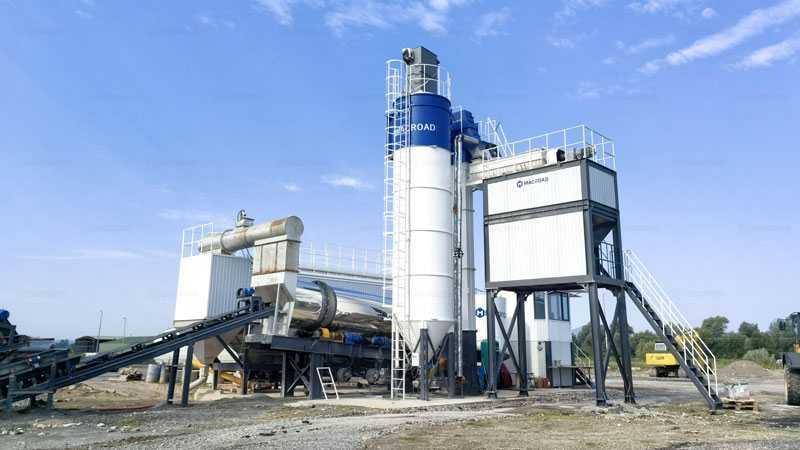
Why Infrastructure Development Is Increasing Asphalt Demand
Road networks remain essential to economic development across Latin America. Highway expansion, road rehabilitation, urban streets, airport access roads, industrial parks, and mining transportation corridors all require reliable asphalt supply.
Road Construction Requires Consistent Asphalt Production
Large road projects often operate continuously and require asphalt with stable temperature, gradation, and binder distribution. A properly configured asphalt plant can provide contractors with greater control over production instead of relying entirely on external suppliers.
For companies evaluating the asphalt plant price, production capacity should therefore be considered alongside the expected project volume. Choosing equipment that is too small may create supply bottlenecks, while excessive capacity can increase unnecessary capital and operating costs.
Urbanization Creates More Local Asphalt Demand
Rapid urban development is generating demand for municipal roads, residential developments, commercial areas, and transportation infrastructure. These projects are often distributed across different locations, making equipment flexibility increasingly valuable.
How Asphalt Plant Price Affects Investment Decisions
The asphalt plant price varies according to production capacity, plant configuration, automation level, heating system, environmental-control equipment, and transportation requirements. Comparing only the quoted equipment price can therefore lead to an incomplete investment assessment.
Capacity Should Match Project Requirements
| Project Type | Typical Equipment Priority | Key Investment Factor |
|---|---|---|
| Urban road projects | Small or mobile asphalt plant | Flexibility and transportation |
| Highway construction | Medium or large asphalt plant | Continuous production capacity |
| Large infrastructure programs | Stationary high-capacity plant | Long-term production efficiency |
| Multiple short-term projects | Mobile asphalt plant | Fast relocation and setup |
Contractors should also calculate the total cost of ownership, including fuel, electricity, spare parts, labor, transportation, installation, and maintenance. A plant with a higher initial asphalt plant price may deliver better economics if it provides higher productivity and lower operating costs.
Drum Mix Asphalt Plants for Continuous Production
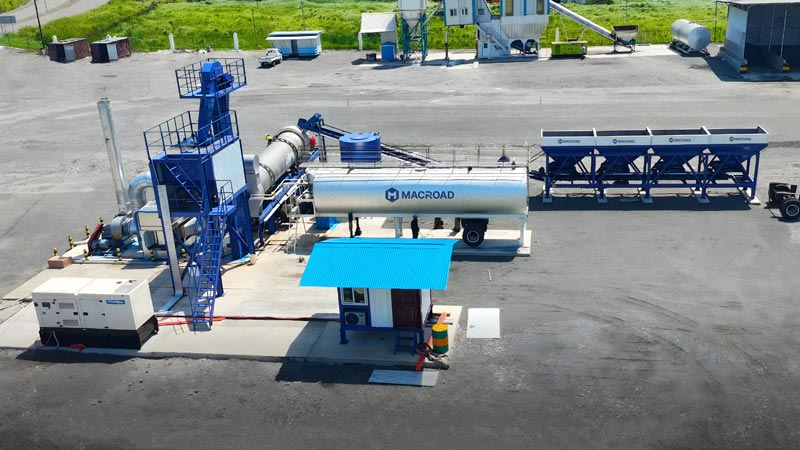
A drum mix asphalt plant(planta de asfalto continua) combines aggregate heating, drying, and mixing in a continuous drum process. This configuration is particularly suitable for projects requiring stable asphalt production over extended operating periods.
Evaluating Drum Mix Asphalt Plant Price
The drum mix asphalt plant price depends on factors such as capacity, burner configuration, dust-collection system, control technology, and auxiliary equipment. Contractors should evaluate the complete production system rather than comparing equipment prices based only on nominal output.
For infrastructure contractors handling large quantities of asphalt, continuous production can improve material supply efficiency. This makes a drum mix plant worth considering when project schedules demand consistent output for long operating periods.
Why Mobile Asphalt Plants Are Gaining Attention
Infrastructure projects in Latin America are not always concentrated in one location. Contractors may move from one road section to another, work in remote areas, or undertake multiple projects across different regions. These conditions increase the value of equipment that can be relocated efficiently.
Understanding Mobile Asphalt Plant Price
The mobile asphalt plant price(planta de asfalto móvil precio) reflects not only the mixing equipment but also the mobility system, transportation configuration, installation requirements, and supporting components. Although the initial price is an important consideration, contractors should also estimate the savings associated with shorter relocation and setup periods.
A mobile plant can reduce dependence on distant asphalt suppliers and shorten the transportation distance between production and paving sites. For remote highway, mining-road, and regional infrastructure projects, these advantages can have a direct impact on overall project costs.
From Asphalt Production to Paving
An efficient asphalt plant is only one part of the paving process. The material must be transported, delivered at the appropriate temperature, spread evenly, and compacted correctly. This makes coordination between the asphalt plant, transport fleet, and asphalt paver essential.
Why the Asphalt Paver Matters
The asphalt paver determines how consistently the hot mix is distributed across the road surface. Production capacity should therefore be matched with the working speed and paving requirements of the asphalt paver.
If the plant produces asphalt significantly faster than the paving operation can consume it, material may wait too long before placement. Conversely, insufficient asphalt production can force the asphalt paver(pavimentadora de asfalto) to stop frequently, reducing paving efficiency and potentially affecting pavement quality.
What Latin American Contractors Should Consider
- Required asphalt production capacity
- Expected project duration and total asphalt demand
- Stationary or mobile plant configuration
- Fuel consumption and heating efficiency
- Initial asphalt plant price and total ownership cost
- Drum mix asphalt plant price versus alternative configurations
- Mobile asphalt plant price and relocation requirements
- Compatibility with transportation and paving equipment
- Spare-parts availability and after-sales support
- Local environmental and emissions requirements
Preparing for the Next Stage of Infrastructure Growth
The infrastructure boom across Latin America is creating a market where asphalt production equipment must deliver more than basic output. Contractors need reliable systems that can maintain asphalt quality while controlling operating costs and adapting to changing project locations.
As investment continues in highways, urban roads, mining corridors, and other infrastructure, the asphalt plant price will remain an important purchasing factor, but it should be evaluated together with productivity and lifecycle costs. Whether contractors select a continuous drum plant, a mobile asphalt plant, or another configuration, the best solution is ultimately the one that matches production demand, project mobility, paving requirements, and long-term operating conditions.