
Indonesia has a growing demand for mineral processing and industrial powder production. From gold and copper ore processing to limestone, silica, quartz, and other industrial minerals, more mining operators and material suppliers are looking for ways to increase the value of their raw materials before selling them. However, purchasing a grinding machine is only one part of establishing a profitable processing operation. The real investment also includes crushing equipment, material handling, electrical systems, foundations, installation, and daily operating expenses.
So, how much investment is required to build a 20 TPH ball mill grinding plant in Indonesia? For preliminary planning, a complete medium-scale grinding project may require approximately USD 300,000–700,000, depending on the raw material, grinding fineness, equipment configuration, and site conditions. This is an indicative budget range rather than a fixed quotation. A project with existing infrastructure and a relatively simple grinding process may require less investment, while a new mineral processing facility with additional separation equipment and infrastructure may require considerably more.
In this guide, we explain the main investment components, equipment selection, installation requirements, operating costs, and potential returns. More importantly, we will show you how to evaluate the actual requirements of a 20 TPH grinding plant before committing your capital.
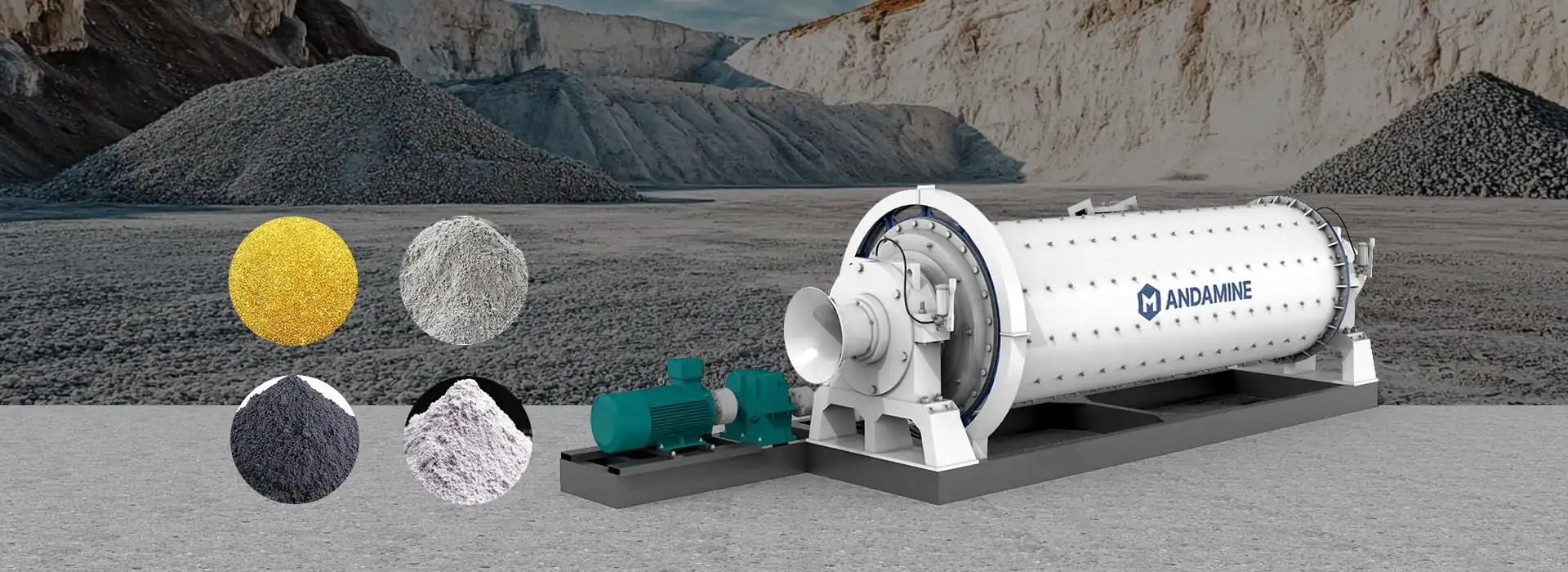
1. What Does a 20 TPH Ball Mill Grinding Plant Mean for Your Business?
Before calculating the investment, it is important to understand what 20 TPH means in actual production. A grinding plant with a nominal capacity of 20 tons per hour processes approximately 20 tons of material every operating hour under the specified working conditions.
However, the actual daily output depends on operating hours, material characteristics, maintenance downtime, and the required final particle size. Choosing the right grinding mill machine therefore requires more than looking at its nominal hourly capacity.
Estimated Production Capacity
For a plant operating at different working schedules, the theoretical production capacity is as follows:
- 8 hours per day: Approximately 160 tons of material.
- 10 hours per day: Approximately 200 tons of material.
- 12 hours per day: Approximately 240 tons of material.
- 16 hours per day: Approximately 320 tons of material.
- 20 hours per day: Approximately 400 tons of material.
These figures represent theoretical feed processing capacity. Actual production will be lower if the plant experiences equipment downtime, material shortages, or changes in grinding conditions.
For Indonesian mining contractors and mineral processing businesses, a 20 TPH grinding plant can provide a practical production scale. It offers more processing capacity than a small workshop operation without requiring the same capital commitment as a large industrial grinding facility.
Which Businesses Can Benefit from a 20 TPH Grinding Plant?
This production capacity can suit several types of businesses in Indonesia:
- Mining operators: Grind crushed gold, copper, iron ore, and other mineral materials before downstream processing.
- Limestone producers: Produce fine limestone powder for construction materials, industrial applications, and other markets.
- Quartz and silica processors: Reduce mineral particle sizes to meet specific industrial processing requirements.
- Industrial powder manufacturers: Supply finely ground materials to construction, ceramics, and related industries.
- Mineral processing contractors: Provide grinding services for nearby mining operations and raw material suppliers.
Nevertheless, these applications do not necessarily require the same grinding configuration. For example, gold ore grinding before flotation or leaching requires different process considerations from producing dry limestone powder. Therefore, material testing and product requirements should guide the equipment selection.
2. How Much Does a 20 TPH Ball Mill Grinding Plant Cost in Indonesia?
The first question most investors ask is the total project budget. However, the price of a ball mill alone does not represent the investment required to establish a complete production line.
A practical budget should cover the main processing equipment, auxiliary machinery, electrical systems, transportation, installation, and site preparation. For a new 20 TPH grinding project, the following figures provide an initial planning reference.
Estimated Investment Breakdown
For preliminary financial planning, consider the following indicative cost allocation:
- Ball mill and main grinding equipment: USD 60,000–180,000.
- Crushing and screening equipment: USD 30,000–80,000.
- Feeding and conveying systems: USD 15,000–40,000.
- Classification and auxiliary equipment: USD 20,000–50,000.
- Electrical control and automation: USD 15,000–40,000.
- Transportation and import-related expenses: USD 10,000–30,000.
- Foundation, installation, and commissioning: USD 30,000–80,000.
- Initial spare parts and commissioning allowance: USD 10,000–20,000.
These are preliminary budget allowances, not supplier quotations. The actual cost of each component depends on equipment specifications, supplier scope, transportation arrangements, and project conditions. Some packages may include several auxiliary systems, so investors should avoid adding overlapping costs when comparing quotations.
As a result, approximately USD 300,000–700,000 is a reasonable initial planning range for evaluating a new 20 TPH grinding plant. Land acquisition, mining rights, major mine development, and extensive downstream processing facilities are not included in this indicative range.
Why Can Two 20 TPH Grinding Plants Have Different Prices?
Although both projects may advertise the same processing capacity, their technical requirements can be very different.
- Material hardness: Harder materials generally require greater grinding energy and more demanding equipment specifications.
- Feed particle size: Material entering the ball mill at 10 mm requires a different grinding arrangement from material entering at 25 mm.
- Final product fineness: Producing 100-mesh powder is not the same as achieving 325-mesh or finer material.
- Wet or dry grinding: Each process requires different auxiliary equipment, material handling arrangements, and dust or water management systems.
- Equipment quality: Motor brands, bearings, liners, drive systems, and electrical components affect the purchase price and long-term maintenance requirements.
- Automation level: A basic control system and a fully integrated automatic production line have different investment requirements.
Therefore, investors should compare complete technical configurations rather than simply selecting the supplier offering the lowest ball mill price.
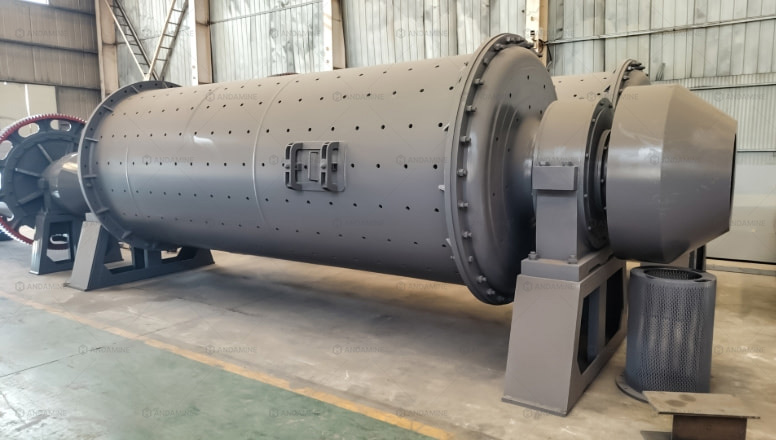
3. What Equipment Is Needed for a 20 TPH Ball Mill Grinding Plant?
After establishing the initial budget, the next step is to determine which machines the production line actually needs. A complete grinding plant normally integrates several processes, including feeding, crushing, grinding, classification, and finished-product handling.
The exact configuration depends on whether the project produces dry powder or processes minerals through a wet grinding circuit. Investors should also evaluate the complete range of Crushing and screening equipment required to prepare raw materials before grinding.
Primary Crushing Equipment
Most raw materials cannot enter a ball mill directly from the mine. Large rocks and mineral lumps must first undergo size reduction.
A jaw crusher for sale is commonly considered for primary crushing because it can handle relatively large feed materials. Depending on the hardness and required discharge size, the production line may also require a secondary crusher.
For example, a limestone grinding project may use the following process:
- Raw limestone enters the feeding hopper.
- A vibrating feeder controls the material supply.
- A jaw crusher reduces the large limestone blocks.
- A secondary crushing stage further reduces the particle size when necessary.
- A conveyor transfers the crushed limestone to the grinding section.
Correct pre-crushing is important because oversized feed material can reduce grinding efficiency and increase energy consumption.
Ball Mill Grinding System
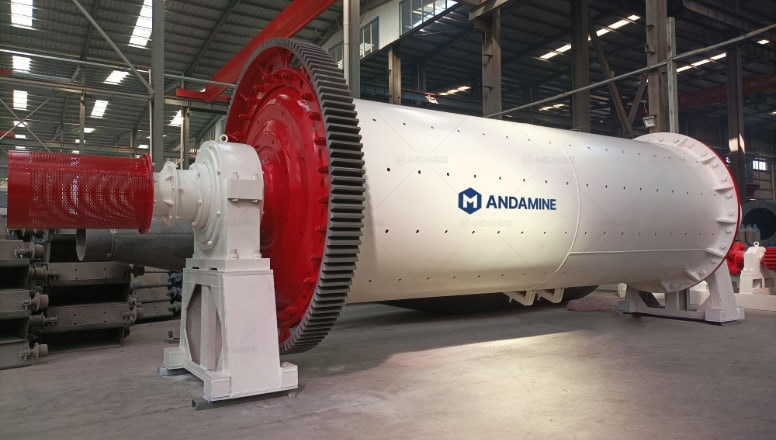
The ball mill is the core machine in the production line. It uses rotating grinding media, usually steel balls, to reduce material particle size through impact and abrasion.
As the cylindrical drum rotates, the grinding media move with the material. The resulting impact and friction gradually produce finer particles. A properly selected grinding ball mill machine must match the material characteristics, feed size, required fineness, and target throughput.
When selecting a ball mill for a 20 TPH project, investors should consider:
- Required hourly processing capacity.
- Material hardness and abrasiveness.
- Maximum feed particle size.
- Target discharge particle size.
- Wet or dry grinding requirements.
- Motor power and energy consumption.
- Grinding media and liner specifications.
For example, a limestone powder producer may prioritize consistent fine powder output, while a gold ore processing operator may focus on mineral liberation and the efficiency of subsequent recovery processes.
Classification and Separation Equipment
Grinding does not automatically mean that every particle reaches the required fineness. A classification system helps separate qualified fine particles from coarse particles that need further grinding.
Depending on the application, the plant may use:
- Hydrocyclones: Separate fine and coarse particles in wet grinding circuits.
- Spiral classifiers: Classify mineral particles according to their settling characteristics.
- Powder classifiers: Control the fineness of dry ground products.
- Vibrating screens: Separate particles according to specified screen openings.
In a closed-circuit grinding system, coarse particles return to the ball mill for further grinding. Meanwhile, qualified fine particles move to the next production stage. This arrangement helps control product fineness and improve grinding efficiency.
Conveying, Storage, and Dust Collection Systems
Auxiliary equipment also influences production stability. Belt conveyors, screw conveyors, bucket elevators, storage bins, and discharge systems help maintain continuous material movement.
For dry grinding projects, dust collection equipment is particularly important. A properly designed dust collection system helps control airborne particles around the crushing, grinding, and packaging areas.
For wet grinding projects, investors should instead pay attention to slurry pumps, water supply, pipelines, storage tanks, and process-water management.
4. How Does the Raw Material Affect Your Investment?
Equipment selection should begin with the raw material rather than the advertised production capacity. This is particularly important in Indonesia, where mining and industrial projects involve a wide range of mineral resources.
Even when two businesses require 20 TPH output, their grinding systems may differ significantly because of material properties and final product requirements.
20 TPH Limestone Grinding Plant
Limestone is widely used in cement production, construction materials, industrial fillers, and other applications.
For limestone powder production, the required grinding fineness is one of the main factors determining equipment selection. A project producing relatively coarse powder may use a simpler classification arrangement, while finer products require more precise particle-size control.
Investors should evaluate raw material moisture, feed size, target fineness, and the intended market before choosing between different grinding configurations.
20 TPH Gold Ore Grinding Plant
Gold ore processing requires more than simply reducing the size of the raw material. The grinding process must help liberate valuable minerals so that downstream recovery equipment can operate effectively.
Depending on the ore characteristics, a gold processing line may include:
- Jaw crushing and secondary crushing.
- Ball mill grinding.
- Hydrocyclone classification.
- Slurry pumping and conditioning.
- Flotation or other suitable mineral recovery processes.
The investment may increase considerably when the project includes flotation cells, leaching tanks, thickening equipment, filtration systems, or other mineral recovery facilities.
Therefore, a 20 TPH gold ore grinding plant should not be confused with a complete 20 TPH gold recovery plant. They have different equipment scopes and capital requirements.
20 TPH Quartz and Silica Grinding Plant
Quartz and silica processing often requires strict control over particle size and product consistency. Depending on the intended application, the production line may need additional classification, screening, and impurity removal equipment.
For higher-value products, investors should also consider contamination from grinding media and liners. The material requirements of the final product may influence the choice of grinding components and processing technology.
In short, the raw material and final product specifications determine the actual equipment configuration. This is why a material sample and grinding test can provide more useful information than a capacity figure alone.
5. What Additional Costs Should Indonesian Investors Consider?
Equipment procurement is only the beginning of a grinding plant investment. Once the machinery arrives at the project site, several other expenses affect the final capital requirement.
For projects in Indonesia, transportation, site preparation, electrical infrastructure, and local operating conditions deserve particular attention.
Land and Civil Construction
A grinding ball mill machine is a heavy rotating machine that requires a properly designed foundation. The foundation must support the equipment load and withstand operational vibration.
Construction requirements may include:
- Ground preparation and site leveling.
- Reinforced concrete foundations.
- Equipment support structures.
- Material storage and feeding areas.
- Drainage and water management systems.
- Access roads and maintenance areas.
Projects on existing industrial sites may save considerable capital because some infrastructure is already available. However, greenfield projects need a more comprehensive civil construction budget.
Transportation and Import Expenses
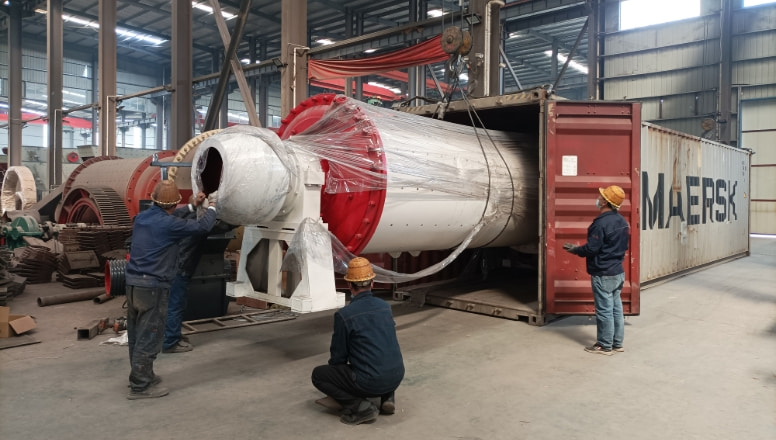
For imported grinding equipment, transportation costs depend on the shipping origin, equipment dimensions, total cargo weight, and delivery destination.
In Indonesia, the location of the project can make a significant difference. A plant installed near Jakarta or Surabaya may have different inland transportation costs from one located in Kalimantan, Sulawesi, or a remote mining area.
Before confirming an order, investors should clarify:
- Whether the quotation uses EXW, FOB, CIF, or another delivery term.
- Whether ocean freight and marine insurance are included.
- Who handles import documentation and customs procedures.
- Whether import duties and applicable taxes are included.
- How the equipment will move from the Indonesian port to the final project site.
- Whether oversized cargo requires special transport arrangements.
These details prevent unexpected expenses after the equipment leaves the factory.
Electrical Infrastructure and Installation
A 20 TPH grinding plant may require substantial electrical power, particularly when it combines crushing, grinding, conveying, and classification equipment.
Investors should calculate the combined installed power and expected operating load. They should also check the availability of a suitable grid connection, transformer capacity, distribution panels, cable routes, and motor protection systems.
For remote mining projects, additional investment may be necessary if the site needs a new power connection or backup generator.
Furthermore, correct equipment alignment, foundation preparation, and commissioning directly influence long-term operating stability. Cutting corners during installation can create costly mechanical problems later.
6. How Much Does It Cost to Operate a 20 TPH Grinding Plant?
A profitable investment depends not only on the initial purchase price but also on the cost of producing each ton of finished material.
For a 20 TPH grinding plant, electricity, grinding media, replacement liners, labor, maintenance, and raw material supply are among the main operating expenses.
Electricity Consumption
Electricity is often one of the largest recurring expenses in a ball mill operation. However, actual power consumption depends on the mill design, material hardness, feed size, product fineness, and overall process efficiency.
For preliminary planning, investors can use an illustrative grinding-circuit energy consumption of 25–40 kWh per ton. This is not a guaranteed consumption figure for every 20 TPH plant and should be verified through equipment selection and material testing.
At a production rate of 20 tons per hour:
- At 25 kWh per ton, the grinding circuit consumes approximately 500 kWh per hour.
- At 30 kWh per ton, the grinding circuit consumes approximately 600 kWh per hour.
- At 40 kWh per ton, the grinding circuit consumes approximately 800 kWh per hour.
For a 10-hour operating schedule, the corresponding daily energy consumption would be approximately 5,000–8,000 kWh.
To calculate the actual electricity cost, multiply the total consumption by the applicable electricity tariff for the project site. Investors should also distinguish between the grinding circuit’s energy consumption and the total plant consumption, which includes Crushing and screening equipment, pumps, conveyors, classifiers, and other auxiliary equipment.
Grinding Media and Wear Parts
Steel grinding balls and mill liners gradually wear during operation. Their replacement frequency depends on material abrasiveness, grinding conditions, operating hours, and component quality.
Investors should consider the following maintenance items:
- Grinding balls and replenishment requirements.
- Mill liners and liner replacement intervals.
- Main bearings and lubrication systems.
- Gear and pinion inspection.
- Conveyor belts and supporting rollers.
- Crusher wear plates and screen components.
Using unsuitable grinding media can increase wear and reduce grinding efficiency. Therefore, replacement costs should be evaluated alongside initial equipment prices.
Labor and Routine Maintenance
A 20 TPH plant also requires operators, electrical technicians, mechanical maintenance personnel, and production supervision.
Labor requirements depend on the automation level and the number of operating shifts. A well-designed control system can simplify production monitoring, but it does not eliminate the need for trained personnel.
For Indonesian investors, local spare-part availability and technical support are particularly important. Waiting several weeks for a critical replacement component can create production losses that exceed the original cost savings from purchasing cheaper equipment.
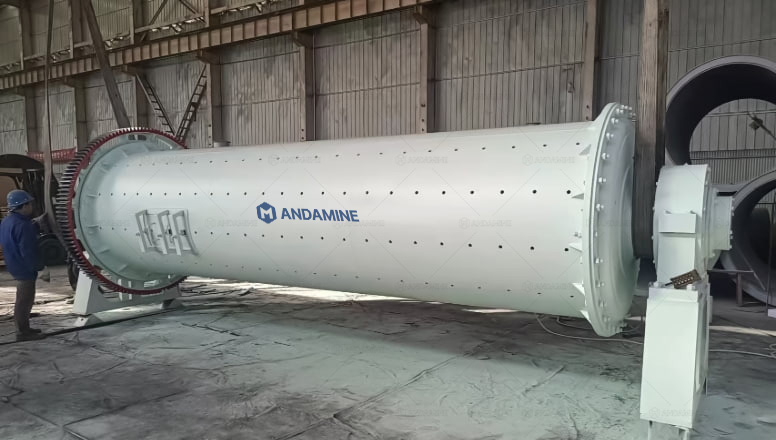
7. How Can You Estimate the Return on Investment?
After calculating the capital and operating expenses, investors need to determine whether the plant can generate sufficient revenue. The most useful approach is to calculate production costs per ton and compare them with the expected selling price or processing service fee.
However, the financial model must reflect the actual business operation. A limestone powder producer, a gold ore processing contractor, and a mineral grinding service provider will have different revenue structures.
Example of a 20 TPH Grinding Plant Business Calculation
Consider a hypothetical limestone grinding operation with the following assumptions:
- Nominal processing capacity: 20 TPH.
- Daily operating hours: 10 hours.
- Operating days: 25 days per month.
- Monthly theoretical feed processing: 5,000 tons.
- Actual utilization assumption: 85%.
- Estimated monthly processed material: 4,250 tons.
The monthly production calculation is:
20 tons/hour × 10 hours/day × 25 days × 85% = 4,250 tons/month.
Now assume the business earns a processing fee of USD 8 per ton. Its estimated monthly processing revenue would be:
4,250 tons × USD 8 = USD 34,000 per month.
This figure represents gross processing revenue, not net profit. The business must still deduct electricity, grinding media, maintenance, labor, water, transportation, administrative expenses, and other operating costs.
For example, if the verified total operating cost is USD 5 per ton, the estimated monthly operating contribution would be:
4,250 tons × (USD 8 – USD 5) = USD 12,750 per month.
If the initial investment were USD 400,000, a simple payback calculation would be:
USD 400,000 ÷ USD 12,750 = approximately 31.4 months.
This is only an illustrative scenario. It excludes financing costs, depreciation, taxes, working capital, and possible changes in market demand. Actual profitability depends on confirmed customer contracts, product quality, selling prices, and production costs.
Three Factors That Can Improve Your Investment Returns
- Secure raw material supply: Reliable material availability helps maintain equipment utilization and reduce production interruptions.
- Confirm product demand: Before building the plant, identify potential buyers and confirm their required specifications, monthly quantities, and purchasing prices.
- Control energy and maintenance costs: Correct equipment sizing, efficient grinding circuits, and planned maintenance help reduce the cost per ton.
In addition, investors should avoid purchasing a larger grinding system than their market can support. Higher capacity does not automatically mean higher profitability if the plant cannot maintain sufficient utilization.
8. How to Choose the Right 20 TPH Ball Mill Supplier in Indonesia
Once the investment plan is clear, choosing a reliable equipment supplier becomes the next important decision. A ball mill is a long-term production asset, so the supplier should provide more than a machine quotation.
Instead, evaluate the supplier’s ability to understand your material, design the complete grinding circuit, and support the equipment throughout its operating life.
Check the Supplier’s Technical Capabilities
A professional supplier should be able to discuss the following technical requirements:
- Material properties and hardness.
- Maximum feeding particle size.
- Required processing capacity.
- Target discharge fineness.
- Wet or dry grinding process.
- Recommended ball mill dimensions and motor power.
- Auxiliary equipment configuration.
- Expected energy consumption and maintenance requirements.
If a supplier recommends a 20 TPH ball mill without asking about the material or final product specifications, you should request a more detailed technical evaluation before proceeding.
Compare Complete Equipment Configurations
Two quotations may show similar prices but include very different equipment scopes. One supplier may offer only the main ball mill, while another may include feeding, classification, conveying, electrical controls, and installation supervision.
For a fair comparison, ask each supplier to provide:
- A complete equipment list with model specifications.
- A process flow diagram.
- Equipment layout and foundation requirements.
- Installed power and electrical requirements.
- Quotation details and delivery terms.
- Warranty conditions and excluded components.
- Installation and commissioning responsibilities.
- Recommended spare parts and maintenance guidance.
This approach makes it easier to identify the real project cost and avoid unexpected purchases during installation.
Evaluate After-Sales Support
Equipment reliability is only part of the investment decision. The availability of technical assistance and replacement components also affects production continuity.
For projects in Indonesia, ask whether the supplier can provide remote technical support, installation guidance, operating instructions, and assistance with spare-part planning. If the project is located far from major industrial centers, clarify how technicians and replacement components can reach the site.
Ultimately, the best supplier is not necessarily the one with the lowest initial quotation. It is the one that can provide an appropriate technical solution and help you control the total cost throughout the equipment’s service life.
9. What Information Should You Prepare Before Requesting a 20 TPH Grinding Plant Quotation?
To receive a useful and accurate quotation, investors should prepare basic project information before contacting an equipment manufacturer.
The more clearly you explain your production requirements, the easier it becomes for engineers to recommend a suitable configuration and calculate the project investment.
Essential Project Information
- Raw material: Limestone, gold ore, copper ore, quartz, silica, or another mineral.
- Processing capacity: 20 tons per hour or another required production target.
- Feed particle size: The maximum size of material entering the grinding system.
- Required final fineness: For example, 100 mesh, 200 mesh, 325 mesh, or a specified micron size.
- Grinding method: Wet grinding or dry grinding.
- Application: Mineral recovery, industrial powder production, construction materials, or other uses.
- Project location: Province, city, and site conditions in Indonesia.
- Installation status: New production facility or expansion of an existing plant.
- Working schedule: Expected daily operating hours and monthly production targets.
If you are processing mineral ore, providing a representative material sample or laboratory test results can further improve equipment selection. For example, ore hardness and grinding test results help engineers assess the required mill power and grinding circuit configuration.
With this information, suppliers can prepare a more realistic equipment proposal instead of providing a generic price based only on the 20 TPH capacity.
10. Is a 20 TPH Ball Mill Grinding Plant a Good Investment for Your Project?
A 20 TPH ball mill grinding plant can be a practical investment for Indonesian businesses that have a stable raw material supply and access to a reliable market for processed products. It provides a medium-scale production option for mineral processing contractors, industrial powder manufacturers, and mining operators.
However, its investment value depends on more than the machine’s hourly capacity. The material’s grinding characteristics, target product quality, equipment configuration, energy consumption, and local infrastructure all influence the final project economics.
Before purchasing, investors should focus on three essential questions:
- Can the selected grinding system consistently achieve the required 20 TPH production rate with the specified feed material and product fineness?
- Does the expected market demand justify the initial investment and ongoing operating expenses?
- Can the supplier provide reliable equipment, technical assistance, and spare parts throughout the plant’s operating life?
If these three conditions are satisfied, a properly configured grinding plant can become a valuable long-term production asset rather than simply another equipment purchase.
Get a Customized 20 TPH Ball Mill Grinding Plant Solution
Planning to establish a 20 TPH ball mill grinding plant in Indonesia? AIMIX can help you evaluate your material processing requirements and explore a suitable grinding equipment configuration for your project.
Whether you plan to process limestone, quartz, gold ore, or other mineral materials, our team can discuss the main equipment requirements, production capacity, auxiliary systems, and investment considerations based on your actual working conditions.
Rather than choosing equipment based on capacity alone, let us help you evaluate the complete production process and identify a practical solution for your investment budget.
Contact ANDAMINE today to discuss your 20 TPH grinding plant project in Indonesia. Send us your raw material type, feed size, target fineness, and project location. Our team can use these details to prepare a more suitable equipment proposal and help you take the next step toward establishing your grinding production line.